

Joseph Mattiello
Scroll

17+ years in the trenches

Joseph Mattiello is a New York-based engineering leader and mobile architect with 17+ years of iOS experience, currently on Wayfair's App Infrastructure team. He created Provenance EMU — the most popular open-source multi-system emulator for iOS (6.3k stars, 388k+ downloads, App Store) — holds 3 US patents from Sense Networks, and architects production AI tooling using Claude, Cursor, and custom MCP servers.

I started writing iOS apps in 2007, before Apple released the official SDK. Back then "iOS dev" meant hacking Objective-C against reverse-engineered SDK headers on jailbroken hardware and praying your build didn't brick the device. I published an open-source toolkit called iPhreak on Google Code — the GitHub of its day — that demonstrated working with the unofficial SDK.


That toolkit was my portfolio piece when I applied to Sense Networks in 2008. I got hired and started by building a GLES (OpenGL ES) demo app to visualize their location-analytics pipeline. While at Sense Networks I became a named inventor on 3 US patentsUS 8,224,766 (spatial-temporal trails), US 8,620,624 (event identification in sensor analytics), and US 9,571,962 (location analytics). The company landed the Newsweek cover in 2009 ("The Next Google") and one of Bloomberg Businessweek's "25 Most Intriguing Startups." The patent portfolio was acquired twice — by YP/YellowPages in 2014, then by Verve in 2017.


After Sense I spent 2010–2012 at Roonlabs / Sooloos writing high-end audio-streaming software — hardware drivers, low-level audio, the kind of work where you live in Core Audio callbacks. Then from 2012–2018 I was Lead Mobile Architect at Hearst Digital News, setting iOS architectural direction across multiple Hearst brands.


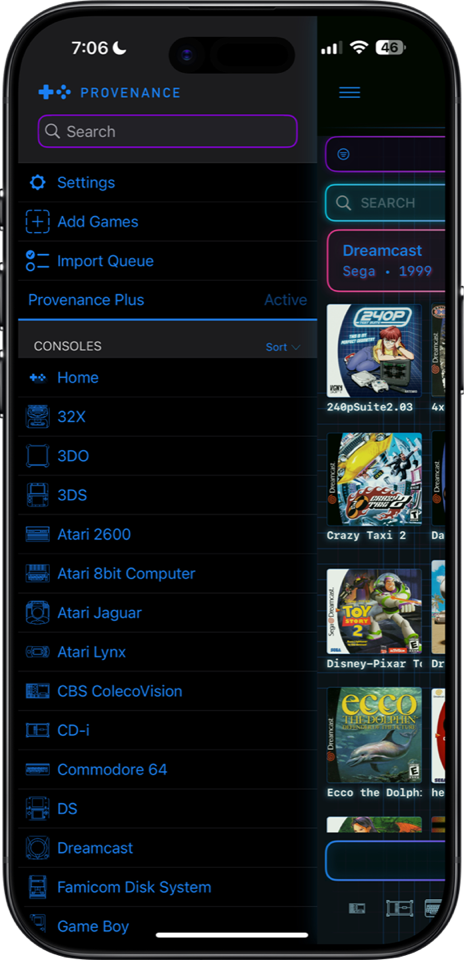
Provenance started in 2013 as a personal project. It became the most popular open-source multi-system emulator for iOS, tvOS, and macOS, was the first emulator on Apple TV (2015), and finally launched on the Apple App Store in January 2025. Almost 13 years in: 6,300+ stars, 79 contributors, 9,373 Discord members, 388,000+ GitHub release downloads, with roughly 85% of all commits authored personally.


In 2019 I joined NewsCorp as Director of iOS Platform, running an 8-region global team across NYC, London, Argentina, Ukraine, Russia, Hong Kong, Sydney, and Bangalore — supporting the Wall Street Journal, NY Post, Times UK, and Knewz (which I shipped from scratch). I took iOS from trailing Android on stability, ratings, and performance to surpassing it on every metric. Then 2020–2021 at Cameo as Principal iOS Engineer — first native iOS dev on a React Native team. I rebuilt the slow, flaky build pipeline and shipped HD video as a native module via AVFoundation.


Today I'm an L4 Mobile Engineer on Wayfair's App Infrastructure team (2025–present), supporting 60+ mobile engineers. Highlights so far: ~$2M/year in bandwidth savings via MP4 compression and a caching strategy (case study), Datadog RUM instrumentation for bootup performance, and an internal AI tooling buildout — custom MCP servers, Claude skills, and plugins used across the platform team.


I split my time between Wayfair, Provenance, and a small set of consulting engagements. I use AI tooling heavily in everything I ship — see the case study on the 3-agent CI orchestration I built across the Provenance org, and the hardware drivers that ship in RetroArch's mainline iOS/macOS builds.

17+
Years in iOS
29k+
GitHub stars (maintained)
3
US Patents
4.4k
Contributions / year

What I build

Emulators, platform SDKs, hardware drivers, enterprise apps. If it runs on Apple hardware, I've probably built something like it.

Maintainer · v2.2.0 just shipped

Virtual Jaguar (libretro) v2.2.0 · 76 commits · solo

Admin and maintainer. v2.2.0 (May 2026) shipped a high-level emulation BIOS that boots most commercial titles without a real BIOS image — removing the longest-standing barrier to entry — plus 22 previously-broken games now functional (Doom, Syndicate, Atari Karts), save states, rewind, RetroAchievements, ~2× speedup on hot paths, audio-pipeline rewrite fixing a 12-year-old bug. 76 commits, all single-author. Powers Jaguar emulation in both RetroArch and Provenance.

Maintainer · AI-built

Jaguar 240p Test Suite 36 PRs · 10 days · v1.3.1

Port of Artemio Urbina's 240p Test Suite to Atari Jaguar hardware — exotic m68k+RISC platform with no LLM training data and a cross-compiler that hasn't been touched in two decades. Built end-to-end with Claude Code as primary author + Copilot & Qodo as adversarial reviewers. Every PR ran a ship→review→address-feedback loop, all captured in the commit log. 36 PRs merged in 10 days, ~84% with explicit AI authorship. Shipped 12 tagged releases including full PAL/NTSC region switching, 7 hardware probes (93C46 EEPROM, Jaguar CD/Butch, JagLink, TOM registers), and a libretro-based smoke-test CI that boots every PR's ROM in virtualjaguar and uploads the framebuffer as an artifact.

iCube
Coming soon

iCube

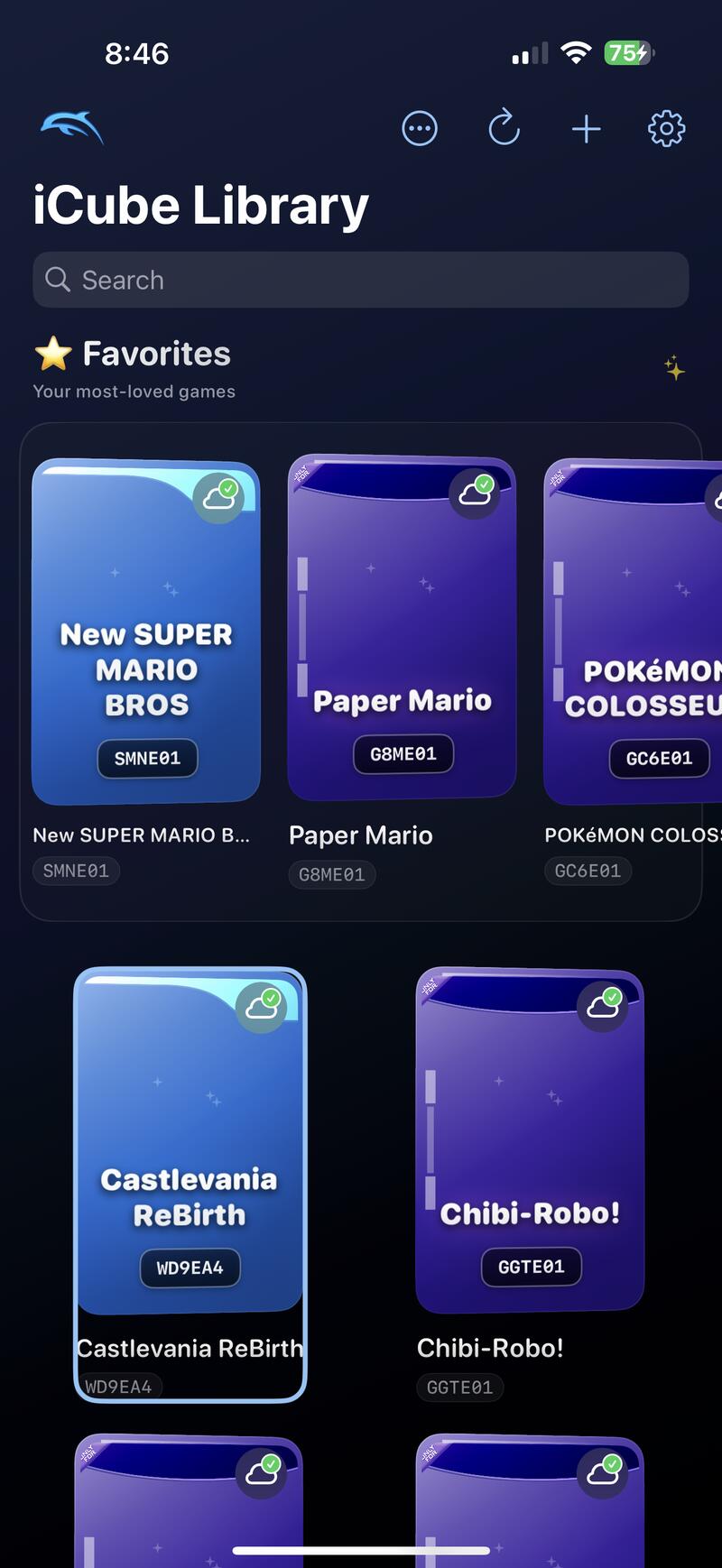
GameCube & Wii emulator for iOS and tvOS. JIT-less Dolphin fork with optimized CPU/GPU interpreter code purpose-built for Apple Silicon. Metal shaders.

iFly
Coming soon

iFly

Dreamcast emulator for iOS and tvOS. JIT-less GPU/CPU interpreter optimized for Apple Silicon. Metal shaders, MFi controller support, save states, automatic cheat downloads.


Where I've moved the needle

Selected work where leadership decisions, technical depth, or both translated into measurable business outcomes. Numbers below are real or directly observable; story expanded on request.

Wayfair · L4 Mobile Engineer, App Infrastructure · 2025–Present
Performance Cost Optimization Observability

~$2M/year in bandwidth savings from a focused engagement.

Joined the App Infrastructure team supporting 60+ mobile engineers. Within the first months: shipped a video compression and caching strategy that pays for the team many times over, plus SwiftUI hot-path optimization and Datadog-instrumented bootup tracking.

The challenge

Video assets across product surfaces were being delivered with no shared compression or caching strategy. At Wayfair's scale, bandwidth costs grow fast — and the cost was hidden across teams, so no one owned it.

What I did
  • MP4 pipeline rewrite. Profiled the existing video delivery path, designed a re-encoding + caching strategy, and validated the savings against real production traffic via Datadog RUM.
  • SwiftUI purchase flow profiling. Instrumented the highest-revenue purchasing flow, identified rendering hot paths, and shipped targeted SwiftUI optimizations.
  • Bootup performance instrumentation. Stood up Datadog RUM tracking for cold-start, splash-to-interactive, and warm-resume timings — the data that's now driving the next wave of perf work.
  • AI tooling for the platform team. Built custom MCP servers, Claude skills/plugins, and n8n workflows that integrate with Jira and GitHub to automate cross-team engineering tasks.
Outcome

Roughly $2M/year in recurring bandwidth savings from the video work, real bootup metrics now feeding a structured optimization roadmap, and a growing internal AI tooling surface used across teams.

Stack Swift SwiftUI AVFoundation Datadog RUM CDN / Caching MCP / Claude n8n

NewsCorp · Director, iOS Platform · 2019–2020
Leadership Platform SDK Global Team DevOps

Inherited an iOS org trailing Android. A year later, we'd passed them on every metric that mattered.

Director of iOS Platform across NewsCorp's global brands — Wall Street Journal, NY Post, The Times UK, Knewz, and more — with engineering teams in NYC, London, Argentina, Ukraine, Russia, Hong Kong, Sydney, and Bangalore.

The challenge

iOS apps across NewsCorp's brand portfolio were lagging Android on app-store ratings, crash rates, performance, and bandwidth. Each brand was duplicating platform code. CI/CD was inconsistent. There was no shared iOS strategy.

What I did
  • Built a shared iOS Platform SDK as an "internal open source" model — every NewsCorp brand consumed it, contributed back, and got the next perf/stability fix for free.
  • Restructured and hired across 8 regions. Set up cross-region code review, release cadence, and on-call ownership.
  • Modernized CI/CD with GitHub Actions, automated PR management, and Jira integrations — the same DevOps automation patterns I'd later carry into my OSS work.
  • Shipped Knewz from scratch — NewsCorp's news-aggregation app — as a greenfield iOS project, end-to-end, while running platform.
Outcome

iOS surpassed Android across the board on stability, app-store ratings, performance, and bandwidth usage. The platform SDK was adopted by every brand and outlived my tenure. Knewz launched on iOS internally-built, on time.

Stack Swift Objective-C Platform SDK GitHub Actions Jira Automation Fastlane Distributed Teams
Cameo · Principal iOS Engineer · 2020–2021
React Native Native Bridging CI/CD AVFoundation

First native iOS dev on a React Native team — fixed the build, shipped HD video.

Cameo was scaling fast and the iOS build pipeline was cracking. I came in as their first dedicated native iOS engineer, with a mandate to make the engineering org actually able to ship — and to enable native-quality features the JS bridge couldn't deliver.

The challenge

The React Native iOS build was slow and flaky — both in CI and locally. Engineers had stopped trusting green builds. And video quality was capped by what JavaScript could push through the bridge.

What I did
  • Rebuilt the iOS RN build pipeline. Profiled every stage, eliminated flakiness sources, and parallelized where it mattered. CI went from "maybe" to predictable.
  • Shipped HD video as a native React Native module. Built compression, transcoding, and playback in Swift/AVFoundation, exposed via the React Native bridge — gave product the quality bar they couldn't get from JS.
  • AR filter exploration. Prototyped native AR filters using ARKit / Core Image, demonstrating the headroom available once you stop fighting the bridge.
  • CI/CD migration to streamline the team's release cycle.
Outcome

Predictable CI, HD video shipped natively, and a clear pattern for the team: when the JS bridge isn't enough, here's how we drop down to native. Engineering velocity recovered.

Stack Swift React Native AVFoundation ARKit RN Bridge CI/CD
Provenance + libretro + 240p Test Suite · Maintainer · 2024–Present
AI Engineering Multi-Agent CI DevOps Open Source

Three autonomous AI agents sharing one orchestration layer — built into production OSS pipelines.

A multi-agent CI ecosystem across the Provenance org and upstream libretro contributions. Claude, Cursor, and Kimi Code coexist as routable workers, with model auto-selection by code-pattern heuristics, fallback resilience, and a scheduled poller that bypasses GitHub's bot-actor approval gate.

The challenge

Maintaining a 13-year-old open-source project with 6.3k stars, 79 contributors, 388k+ downloads, and an active App Store presence — while working full-time. Solo-maintainer velocity is the rate-limiter. Generic "use Copilot" doesn't move the needle.

What I built
  • Reviewer-model auto-selection by static diff analysis. The PR review workflow grep's the diff for thread-safety patterns (Realm, @Model, actor, @MainActor) — simple PRs route to Claude Sonnet; thread-safety-sensitive PRs route to Claude Opus. Real cost optimization, not vibes.
  • Three agents, one action vocabulary. Claude Code, Cursor Agent, and Kimi Code share dispatch verbs — implement_issue, fix_ai_review, fix_rebase_conflict, ai_approved — routed by branch name and PR labels. Effectively a multi-agent orchestration layer on top of workflow_dispatch.
  • Kimi Code as Anthropic-API-compatible fallback. When Claude credits run low, the same Claude Code CLI binary redirects via ANTHROPIC_BASE_URL to drive Kimi — zero workflow rewrite.
  • Scheduled Copilot review poller. GitHub blocks event-triggered workflows from bot actors. The 10-minute cron poller bypasses the approval gate by running as a trusted scheduled actor — a deliberately documented workaround.
  • Auto-fix CI on the wiki repo. Spell-check / link-check failures spawn Claude via anthropics/claude-code-action, which fixes the root cause and opens its own PR (with Copilot reviewer auto-requested).
  • AI-driven localization. Diff-aware Claude Haiku pipeline translates only changed strings into 11 languages — cost-controlled by extracting just the new keys, not the whole file.
  • Repo health monitor. Cron job detects stuck PRs, re-dispatches reviews, and maintains a pinned automation-health issue.
  • Upstream-merged Claude Code workflow. Installed Claude Code into the libretro upstream itself (PR #107) — alongside 19 merged feature PRs covering save states, RetroAchievements, SIMD blitter, WASM/Emscripten, and Jaguar CD support.
Outcome

OSS velocity sustained at scale on a solo-maintainer schedule. The pipeline handles routine review, rebase conflicts, localization, and CI failures autonomously — escalating to me only when bounded review cycles complete or 3-cycle limits are hit. This is what "AI engineering leadership" looks like when it's real, not slideware.

Proof — read the code
Stack Claude Code Cursor Kimi Code Anthropic API GitHub Actions workflow_dispatch MCP
Atari Jaguar 240p Test Suite · Maintainer · 2026 (April)
AI-Assisted Dev Bare-Metal Adversarial Review Open Source

Built a homebrew test ROM for 30-year-old hardware with AI as primary author — on a platform LLMs have effectively zero training data for.

Port of Artemio Urbina's 240p Test Suite to Atari Jaguar. m68k + Tom/Jerry RISC, cross-compiler that hasn't been touched in two decades, no Stack Overflow answers, no GitHub Copilot context to pattern-match against. Used Claude Code as primary author paired with GitHub Copilot and Qodo as adversarial reviewers — every PR ran a ship → AI review → address feedback loop, captured in the commit log itself.

The challenge

Bare-metal Atari Jaguar is the kind of hardware LLMs don't know — released 1993, niche m68k+RISC architecture, ~half a dozen active homebrew developers worldwide, a cross-compiler that hasn't seen a release in 20 years. Conventional wisdom says "AI can't help here." This case study disproves that.

What I built
  • Three-agent ship→review→address-feedback loop captured in the commit log. Examples: cd97ceb "review: address Copilot/Qodo feedback on PR #5"; PR #25 entirely dedicated to addressing Copilot review on merged PR #24. The iteration is in the git history, not just the chat transcripts.
  • Cross-cutting hardware-aware change. PR #27 (PAL pass) — region-override toggle in Options menu, region-aware geometry replacing hardcoded H=240 with PALNTSC ? 240 : 288 across 10 procedural pattern functions, 50 Hz timing for AudioSync + MDFourier, plus VDP register diagnostics. Exactly the type of cross-cutting refactor LLMs typically struggle on bare-metal.
  • 7 hardware probe features shipped. 93C46 EEPROM read/write, Jaguar CD/Butch probe, JagLink serial test, Memory Track EEPROM, Sprite Stress / OP saturation, Pro Controller + Rotary controller, Video Mode TOM register probe.
  • Custom Jaguar SDK in a Docker image, published to GHCR. The .github/workflows/sdk-image.yml builds ghcr.io/joematt/jaguar-sdk (m68k-atari-mint-gcc, mac, aln, jlibc/rmvlib) so build/release can pull it instead of recreating the toolchain. Solves the "exotic cross-compile toolchain" problem by containerizing it.
  • Image-diff-style smoke-test CI. .github/workflows/build.yml's smoke-test job checks out libretro/virtualjaguar-libretro upstream, caches the built core keyed on resolved upstream SHA, boots the freshly built ROM via a Python libretro.py harness for 60 frames, dumps the framebuffer as a PNG artifact, and verifies fastboot signature byte-identical to upstream. Real visual regression testing for a ROM project.
  • Visual regression harness. PR #35 / commit 0fc3eb3 expands a scripted screenshot tour from 19 → 47 navigable test screens, captured automatically via scripts/screenshot-tour.py. Closest thing the bare-metal codebase has to visual diffing.
  • Disciplined release engineering. 12 tagged releases (v0.6.4 → v1.3.1) in 10 days. Each feature PR followed by a dedicated release: bump version to X.Y.Z PR.
Outcome

Goes against the prevailing narrative that AI-assisted development only works on well-trodden stacks. Bare-metal Jaguar is the test case where it absolutely shouldn't work — and the git history shows it does. The pattern is the durable insight: AI as primary author + adversarial reviewers + iteration captured in commit history.

Proof — read the code
  • PR #27 — PAL pass, region-aware geometry across 10 pattern functions
  • PR #25 — entirely addresses Copilot review of merged PR #24
  • PR #35 — Screenshot tour expanded to 47 screens
  • build.yml — smoke-test CI booting every PR ROM
  • sdk-image.yml — Custom Jaguar SDK Docker image
  • Releases — 12 releases in 10 days
Stack Claude Code GitHub Copilot Qodo m68k Atari Jaguar libretro Docker GitHub Actions Python harness

Where I've worked

From pre-SDK jailbreak apps to platform infrastructure serving millions of users.

Wayfair 2025 — Present
L4 Mobile Engineer — App Infrastructure
New York, NY (Remote)
  • Instrumented Datadog RUM across the iOS app, giving the team release-over-release UX metrics for the first time
  • Built Datadog dashboards used by multiple teams for performance triage and release validation
  • Created a bootup task profiling system that catches performance regressions before they ship
  • Developed AI-powered skills, MCP servers, and plugins adopted by internal engineering teams
  • Automated cross-team workflows with n8n, Jira, and GitHub integrations
Wayfair Jan 2025 — Sep 2025
L4 Mobile Engineer — Product Discovery
New York, NY (Remote)
  • Owned the product discovery feature set on iOS, driving measurable gains in engagement and conversion
  • Cut app startup time and reduced network overhead through targeted profiling
  • Redesigned the homepage layout with shimmer states and modern interaction patterns
Matti Media LLC 2021 — Present
Founder
New York, NY
  • Creator of Provenance, the most popular open-source multi-system emulator for iOS/tvOS/macOS. Now on the App Store (388k+ downloads, 6.3k stars)
  • Ported 50+ C/C++ emulator cores to Swift Package Manager, optimized for ARM
  • Full SwiftUI interface with Spotlight, QuickLook, FileProvider, Stickers, and Siri integration
Cameo 2020 — 2021
Principal iOS Engineer
New York, NY
  • First native iOS hire on a fully ReactNative codebase. Rebuilt performance-critical paths in Swift
  • Added HD async video compression, cutting bandwidth costs and upload times
  • Migrated CI/CD from shell scripts and CircleCI to GitHub Actions (10x faster PR validation)
NewsCorp Inc. 2019 — 2020
Director iOS Platform (Global HQ)
New York, NY
  • Ran iOS development across 8 regions. Built the core SDK used by DowJones, NYPost, The Australian, Barrons, Times UK
  • Hired and led the Knewz iOS team from zero. 4.5+ star rating, unsolicited App Store feature by Apple
  • Stood up a satellite team in Barcelona and restaffed engineering in Argentina, Bangalore, and Ukraine
Salido Inc. 2018 — 2019
Lead Developer
New York, NY
  • Ran the front-end team and led architecture for 3rd-party vendor integrations
  • Created the first Swift-native XML-SOAP framework with full Codable support
Hearst Digital News 2012 — 2018
Lead Mobile Architect / Team Lead
New York, NY
  • Took the app from constant crash reports to a 4+ star rating (80% crash reduction, 30% less memory)
  • Architected the universal app rewrite on Swift 2.0, CoreData, and CoreText
  • Set up Hadoop analytics systems and managed office and colo network infrastructure
Sooloos / Roonlabs 2010 — 2012
Software Engineer (iOS/macOS)
New York, NY
  • Bridged C#/Mono audio decoders to Core Audio. Wrote CoreMIDI and CoreAudio wrappers contributed to MonoMac
  • Sole Objective-C developer and UI designer for the Sooloos iOS sync and playback app
Sense Networks 2008 — 2010
Software Engineer (iOS/DevOps)
New York, NY
  • Built Citysense for iPhone before Apple released the SDK. Named inventor on 3 US patents. Company featured on the cover of Newsweek ("The Next Google")
  • Created CabSense, an NYC taxi availability app. Featured in the NY Times (3 articles), TechCrunch, VentureBeat, Wired UK, and more
  • Accepted as an official FSF/GNU developer through major GNUstep PBXBuild contributions
Earlier 2006 — 2007
People Security (Security Consultant) • AT&T Tech Channel (Producer)
New York, NY / Bedminster, NJ
  • People Security: Developed secure coding training with Dr. Hugh Thompson (buffer overflows, stack exploits)
  • AT&T: Booked and produced segments with Emanuel Goldstein (2600), Whit Diffie (RSA), Jack Dorsey (Twitter), H.D. Moore (Metasploit)

Technical expertise

⌨️ Languages

Swift5/5
Objective-C5/5
C++4/5
C5/5
JavaScript4/5
Python3/5
C#3/5

🔧 Tools & Platforms

AI/LLM Tooling5/5
GitHub Actions / CI/CD5/5
Datadog (RUM, APM)4/5
n8n Automation4/5
Jira Automation4/5

📱 SDKs & APIs

iOS/tvOS SDK5/5
UIKit5/5
SwiftUI5/5
Core Audio / MIDI5/5
XCTest5/5
AVFoundation4/5
Combine4/5
Realm5/5

Community contributions

I maintain libraries with tens of thousands of stars, write drivers for RetroArch, and contribute to projects I use every day.

RetroArch

Authored Apple platform drivers: camera (AVFoundation), microphone, CoreMIDI, and WiFi — all merged to mainline iOS/macOS/tvOS builds

UTM

Virtual machine host for iOS/macOS

Hero Transitions

Maintained custom view controller transition library for Swift

RxSwift Community

Maintainer of RxRealm & RxReachability

XMLCoder

Significant PRs — attributed intrinsic value coding, dynamic node encoding

Mono / Xamarin

Authored CoreMIDI, CoreAudio, and Foundation C# wrappers for MonoMac

GLideN64

Open-source N64 graphics plugin contributions

SideStore

21 merged PRs. Rust build integration, error handling, settings, pairing. Org member

mupen64plus

Buffer overflow fix in core, removed system() calls for iOS/tvOS compatibility

Flycast (Dreamcast)

Metal renderer fixes, Vulkan portability, audio drift fixes (4 open PRs)

View all on GitHub →

Patents, press & impact


What people say

A mix of press quotes about my work and LinkedIn recommendations from colleagues and collaborators.

Press

Mattiello's emulator Provenance… grew well past that original enthusiast crowd.

Daryl Baxter

MobileGamer.biz · April 2026

→ source
Press

Developer Joseph Mattiello has launched a new emulator on mobile.

Pocket Gamer

Dedicated Provenance hub

→ source
Press

All the nostalgic arcade goodness you want on mobile.

iMore

Exclusive coverage

→ source
LinkedIn

[Placeholder — LinkedIn recommendation will go here]

[Name]

[Role at Company]

LinkedIn

[Placeholder — LinkedIn recommendation will go here]

[Name]

[Role at Company]

LinkedIn

[Placeholder — LinkedIn recommendation will go here]

[Name]

[Role at Company]


Foundation

🎓

BS, Computer Science

University at Buffalo

2004 — 2008

Beyond code

When I'm not deep in Xcode or a debugger, I'm wrenching on my M2 CS or behind the decks.

🏎️

BMW M2 CS

6-speed manual, track days, and weekend wrenching. Documenting the build and drives on Instagram.

@m2_cs_6mt
🎧

Music & Production

DJ sets on SoundCloud. Build Max for Live patches and reverse-engineered USB/MIDI drivers for DJ controllers and synths.

joe-mattiello

Answers to the things people ask

Direct answers — engineering, consulting, hiring, and history. Each question has a permalink anchor.

Who is Joseph Mattiello? +

Joseph Mattiello is a New York-based engineering leader and mobile architect with 17+ years of iOS experience. He is the creator of Provenance EMU — the most popular open-source multi-system emulator for iOS, tvOS, and macOS — and currently works on Wayfair's App Infrastructure team. He holds 3 US patents and builds production AI tooling using Claude, Cursor, and custom MCP servers.

What is Provenance EMU? +

Provenance is the most popular open-source multi-system retro game emulator for iOS, tvOS, and macOS. Created by Joseph Mattiello in 2013, it has 6,304 GitHub stars, 79 contributors, 9,373 Discord members, and 388,000+ GitHub release downloads. Provenance launched on the Apple App Store in January 2025 and supports 50+ console systems through 60+ emulation cores.

Can I hire Joseph Mattiello for AI or iOS consulting? +

Yes. Joseph offers a Mobile AI Launch Readiness audit — a 3-week fixed-fee engagement ($25,000–$35,000) covering iOS performance, AI integration architecture, App Store review readiness, and on-device LLM/MLX/Core ML pipelines. He is currently considering 1-2 engagements for Q3 2026. See joemattiello.dev/consulting/ for details or email mail@joemattiello.com.

What patents does Joseph Mattiello hold? +

Joseph Mattiello is a named inventor on three US patents from his time at Sense Networks: US8224766B2 (Comparing spatial-temporal trails in location analytics), US8620624B2 (Event identification in sensor analytics), and US9571962B2 (System and method of performing location analytics). The patent portfolio was acquired twice — first by YP/YellowPages in 2014, then by Verve in 2017.

Where is Joseph Mattiello based? +

New York City. Available for hybrid roles in NYC and remote engagements globally.

What types of roles is Joseph Mattiello considering? +

Joseph is selectively considering Head of AI Platform, Head of AI Infrastructure, VP Engineering, Director of Mobile, and CTO roles. He also takes on a small number of fractional and advisory engagements per year.

What AI tooling has Joseph Mattiello built? +

Joseph built a production multi-agent CI orchestration system across the Provenance organization that routes work between Claude (Sonnet and Opus, auto-selected by static diff analysis), Cursor Agent, and Kimi Code. The pipeline includes diff-aware Claude Haiku localization, scheduled Copilot review polling that bypasses GitHub's bot-actor approval gate, auto-fix CI on the wiki repo, and a repo-health monitor. At Wayfair he builds custom MCP servers and AI-driven workflows for the App Infrastructure team.

How does Joseph use AI in production engineering? +

He orchestrates Claude (Sonnet and Opus, auto-routed by static diff analysis), Cursor Agent, and Kimi Code as routable workers across the Provenance org's CI. He also builds custom MCP servers, Claude skills/plugins, and n8n workflows for the App Infrastructure team at Wayfair. See the case study on the multi-agent CI for architecture details.

How long has Joseph been working on iOS? +

Since before Apple released the SDK in 2008. He started by writing apps using reverse-engineered SDK headers on jailbroken hardware, including a tool called iPhreak hosted on Google Code. That was his portfolio when he applied to Sense Networks in 2008. Provenance, his most-known iOS project, has been running since 2013 — almost 13 years.

What makes the Mobile AI Launch Readiness Audit different from a generic mobile audit? +

Most mobile audits stop at performance and crash analysis. This one goes through three intersecting risk surfaces: native iOS performance under MLX/Core ML inference, App Store review policies on AI content (sections 4.7, 5.1.5, 5.5), and the architectural debt that surfaces when teams bolt agents onto an app that wasn't built for them. The deliverable is a written report plus prioritized fix list, sized so an internal team can act on it.

How can I see what Joseph has actually shipped? +

Three places: (1) github.com/JoeMatt for code, (2) the Provenance App Store listing for production work, (3) joemattiello.dev/#impact for narrative case studies with metrics.

What's the best way to start a conversation about a role or engagement? +

For full-time roles: LinkedIn DM. For consulting engagements: the /consulting/ page has a fixed-fee offer with a direct inquiry path. For everything else: mail@joemattiello.com — replies usually within 48 hours.


Also a terminal app

This resume runs as a native Swift TUI application with ncurses. Tabs, search, scroll — all in your terminal.

joseph.mattiello.resume — zsh

Try it yourself:

git clone https://github.com/JoeMatt/joseph.mattiello.resume.git && cd joseph.mattiello.resume && swift run
ESC